
Some of us may have sat nervously on the edge of a bed or chair while a physician made a rough sketch about a complicated medical condition. I’ve seen this happen many times as a patient, caregiver and healthcare worker. I have only seen a lay person do the same for a physician once.
The physician was confused, like most patients are, when confronted with life-changing news. The lay person, father of a dying girl in need of a miracle, was trying to explain to the physician his cause for hope despite a desperate prognosis. His sketch looked like this:
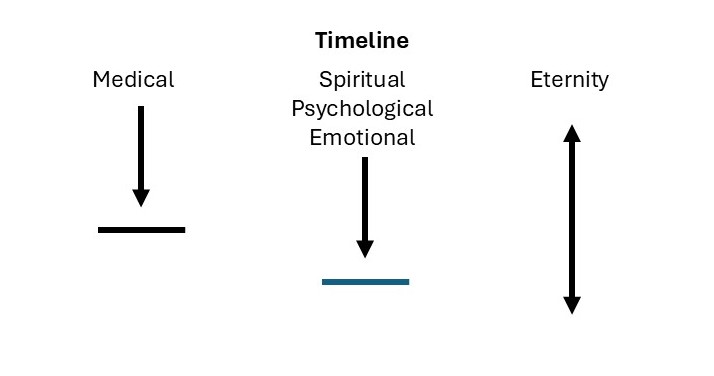
There are limits to human knowledge, the father argued. Medicine is always discovering something new, just as the social sciences (and all sciences) grapple with new findings. All things, however, are known in eternity. Why, the father wanted to know, rely solely on the limitations of medicine when there is something greater?
This encounter explains in part Maria Middleton’s unyielding trust in God following her terminal brain cancer diagnosis. The miracle we all thought she needed didn’t happen. Instead, her 20-month journey in search of a cure discovered Divine Providence in every moment. Even now, five years after Maria passed into eternal life, her story awakens faith in some and deepens it for others, evidenced by more than 800-1,000 who attended her memorial Mass on October 16.

 Practicing, Not Perfect